2011年3月18日 星期五

感動人的英國獨立 がんばれ!報: Don't give up, Japan. Don't give up, /Tohoku


這幾天出自災民、受訪者,最常聽到的是「頑張れ!」﹙加油!﹚和「ありがとう!」﹙謝謝!﹚


3/17
台湾の小学生たち「日本がんばれ! 日本加油!」と応援
ロケットニュース24
こちら台湾では、小学生たちが「日本がんばれ! 日本がんばれ!」(日本加油! 日本加油!)と叫んで応援する動画がYouTubeに掲載されて話題になっています。日本への応援メッセージを叫んでいるのはまだ小学生になったばかりの一年生たち。 この台湾小学生たちの姿 ...
このトピックに関する記事をすべて表示する »

ロケットニュース24

---3/14

Don't give up, Japan. Don't give up, Tohoku - The Independent

- [ 翻譯此頁 ]


感動人的英國獨立報

Don't give up, Japan. Don't give up, Tohoku


Towns vanish, thousands die – but a nation begins its fightback

The cataclysm was so powerful it shifted the Earth off its axis. Then the waters hit. David Randall reports on a land in crisis

Sunday, 13 March 2011


Don't give up, Japan. Don't give up, Tohoku

Don't give up, Japan. Don't give up, Tohoku

Sponsored Links

After a cataclysm so powerful it moved the Earth 10 inches off its axis, Japan woke yesterday to find itself a country that had, literally, been knocked sideways.

With the north-east coast now shunted two metres from where it was on Friday morning, neighbourhood after neighbourhood is submerged under a grotesque soup of water and debris. Homes have been flattened as if by the swiping forearm of an angry giant. Tens of thousands of once orderly acres look like the world's ugliest landfill – a jumble of broken homes, cars, boats, and concrete, with shipping containers cluttering the landscape like Lego on an unkempt nursery floor.

And somewhere, under all this vast mess, are four entire trains, small towns, villages, and a fearful number of bodies. It could be 2,000, 10,000, or many times that number. In one town alone, 9,500 people are unaccounted for.

And, as if that were not enough, only 150 miles from Tokyo, radiation leaked from a nuclear plant crippled by an explosion. Officials were swift to assert that any meltdown, if it came, would not be on anything like the scale or severity of Chernobyl, but 170,000 were evacuated, and iodine distributed to some. It would not be the first nuclear incident where initial assurances proved optimistic.

The authorities at first said that an evacuation radius of six miles from the stricken 40-year-old Daiichi 1 reactor plant in Fukushima prefecture was adequate, but, an hour later, the boundary was extended to 13 miles. Vapour, said to consist of minimally radioactive steam, could be seen rising from the plant. And then, in the early hours this morning, there came a 6.4 Richter scale aftershock. More may come.

The explosion came as the plant operator, Tokyo Electric Power Co, (Tepco) was working desperately to reduce pressure in the core of the reactor. Lest anyone think that, in this land of commercial efficiency, the assurances of little risk can be trusted implicitly, they should remember that this is the nuclear industry they are dealing with. In 2002, the president of the country's largest power utility was forced to resign, along with four other senior executives, taking responsibility for suspected falsification of nuclear-plant safety records.

But despite everything, Japan's spirit remains intact. As one blogger wrote yesterday: "Our grandparents rebuilt Japan after the war and the growth was considered a miracle around the world. We will work to rebuild Japan in the same way again. Don't give up Japan! Don't give up Tohoku [the north-east region]!"

A stupendously large task, however, faces it. Friday's quake was the most monstrous even this, the world's most tremor-prone country, has ever recorded. This was strong enough to leave a 186-mile rupture on the ocean floor, but it was the subsequent tsunami – sending 30ft-high waves barrelling into Japan's north-east coast – which has turned a disaster into a cataclysm. The wall of water, moving at an estimated 25 mph, swallowed boats, homes, cars, trees and even small planes, and used these as battering rams as it charged up to six miles inland, demolishing all that stood in its way.

The town of Rikuzentakata, population 24,700, in northern Iwate prefecture, looked largely submerged in muddy water, with hardly a trace of houses or buildings of any kind. And in Kesennuma, where 74,000 lived, widespread fires somehow burned, despite a third of the city being submerged. And then there is – or, to be more accurate, was – the port of Sendai, which had the misfortune to be only 80 miles from the epicentre of the 8.9 quake.

Here, until Friday early afternoon, was the city of a million people. Now, at least a third of it lies beneath the filthy waters and mud, and what isn't drowned is largely destroyed. The city's Wakabayashi district, which runs directly up to the sea, remained a swampy wasteland, with murky, waist-high water. Most houses were completely flattened, as if a giant bulldozer had swept through.

Police said they found 200 to 300 bodies washed up on nearby beaches, and grief-stricken residents searched for their former homes, but, faced with dark waters where streets had been, many couldn't even tell where their houses once stood. Occasionally, there was something recognisable – a chair, a tyre, a beer-cooler. In the city's dock area, cars swept away by the waves sat on top of buildings, on the top of other cars, or jammed into staircases.

Many Sendai residents spent the night outdoors, or wandering debris-strewn streets, unable to return to homes damaged or destroyed by the quake or tsunami. Those who did find a place to rest for the night awoke to utter despair. Miles from the ocean's edge, weary, mud-spattered survivors wandered streets strewn with fallen trees, crumpled cars, and light aircraft. Relics of lives now destroyed were everywhere – half a piano, a textbook, a red sleeping bag.

Rescue workers plied boats through murky waters around flooded structures, nosing their way through a sea of detritus, while smoke from at least one large fire billowed in the distance. Power and phone reception were cut, while hundreds of people lined up outside the few still-operating supermarkets for basic commodities. The petrol stations on streets not covered with water were swamped with people waiting to fill their cars.

The situation was similar in scores of other towns and cities along the 1,300-mile eastern coastline hit by the tsunami. Early yesterday morning, Atsushi Koshi, 24, a call-centre worker in the coastal city of Tagajo, about 10 miles east of Sendai, said his cousin remained trapped on the roof of a department store with 200 to 300 other people awaiting rescue. The rest of his family was safe, but he wondered what to do, since the house he shares with his parents was tilting after the quake, and a concrete block wall had fallen apart.

One hospital in Miyagi prefecture was seen surrounded by water, and, at another, television footage showed staff on a rooftop waving banners with the words "FOOD" and "HELP" on them. Rescue teams and helicopters were plucking some people to safety, but, as night fell on the second day of the disaster, many were still awaiting salvation. Large areas are still surrounded by water and unreachable.

In five prefectures, or states, more than 215,000 people are now living in 1,350 temporary shelters. At an evacuation centre in Iwate, more than 1,000 people evacuated there had next to no supplies, gas, electricity, or running water. They had only been allowed one glass of water, one onigiri rice ball, and half a piece of bread as rations yesterday – a typical allocation in evacuation centres in all the hardest hit areas. Most of all, beyond the most stricken places, people are without power; some four million have no power, one million lack water.

Although Tokyo's inner-city transport is tentatively beginning a return to normal, all highways from the capital which lead to quake-hit areas were closed, except for emergency vehicles. Tens of thousands of people had been stranded on Friday with the rail network down, and, despite the city setting up 33 shelters in City Hall, on university campuses and in government offices, many spent the night at 24-hour cafés, hotels and offices. Mobile telephone communications were patchy, and calls to the devastated areas were going unanswered.

The enormous rescue and emergency supplies operation is now beginning to gather pace. The Prime Minister, Naoto Kan, said 50,000 troops would be deployed, and a total of 190 military aircraft and 25 ships have been sent to the north-east, where more than 125 aftershocks have occurred. Many of them were above magnitude 6.0, which, in normal circumstances, would be considered strong.

The UN announced late on Friday that four foreign search-and-rescue teams, from Australia, New Zealand, South Korea and the US, were on their way. Singapore is sending an urban search-and-rescue team, as is Britain; Switzerland has sent 25 rescue and medical experts, with nine sniffer dogs.

All this, in a nation which may seem the epitome of industrial efficiency, but is the most heavily indebted major economy in the world. The first estimates of the total insured loss caused by the quake and tsunami were put yesterday at £9.3bn – a wickedly unwelcome burden on an economy just starting to show signs of revival. Japan will need all its famed organisational powers in the coming days and weeks.

Additional reporting by Midori Bills and Kyoko Nishimoto

The figures: Drowned towns, radiation leaks

Yesterday's main developments after an 8.9 magnitude earthquake that struck north-east Japan on Friday and set off a tsunami:

* More than 1,700 people officially dead or missing, with many more unaccounted for, including 9,500 people in one town.

* Radiation leaks from a damaged nuclear plant after an explosion blows off the roof, raising fears of a meltdown at the facility north of Tokyo.

* Three workers suffer radiation exposure near Fukushima nuclear plant. Nuclear safety agency rates the incident a 4 on the 1-7 International Nuclear and Radiological Event Scale, less serious than Three Mile Island, a 5, and Chernobyl, a 7.

* Several large towns and cities are more than a third submerged by waters and debris.

* Some 215,000 people living in government shelters.

* Four million without power, a million with no water.

* Total insured loss could be up to $15bn, equity analysts covering the industry says.

轉型正義

轉型正義週訊 No.130 (2011/3/18)

*總統府與研考會對本會「以清償國家人權負債紀念建國百年記者會」回應

本會於217日,曾協同白色恐怖時期政治受難者黃溫恭之家屬,召開「以清償國家人權負債紀念建國百年記者會」,我們在記者會中提出的三點訴求如下:

1.請馬英九總統代表國家,親手將這批遭國家「留置」數十年的私人文件奉還家屬,並舉行公開儀式,代表國家向家屬致歉。此舉亦俾利於向社會宣傳,促使其他受難者家屬,踴躍向檔案局提出檔案查閱申請。

2.
我們要求,檔案局應在法制層次,為類似案件的申請返還流程建立機制。

3.
我們呼籲政府應投注更多資源,清查並徵集各機關政治案件檔案。並且必須進一步清查所藏檔案中,是否尚夾有此類私人文件;若有所獲,則需主動通知家屬前來認領。以展現國家坦於面對過錯,療癒歷史傷痕的決心。

隔日自由時報與Taipei Times都報導了相關訊息。在將記者會訊息寄發到總統府信箱後,我們得到了以下來自總統府與主責機關行政院研考會的回應,今轉貼如下,以供關心的各界人士參考:

總統府回函分為兩部分:
您所反映的事項,我們非常關心與重視,所以已將來信移請權責機關行政院研究發展考核委員會; 處理,並由該機關直接回覆給您,敬請靜待處理結果。感謝您的來信,祝福您
平安如意 總統府敬啟 」
「回覆內容:
來信收悉,總統知悉許多家屬內心的傷痛至今仍難以平復,因此「二二八紀念基金會」今後的兩項任務,一是繼續從事真相調查,二是提供歷史的教育,讓後代子孫瞭解「二二八事件」的真相;有關該次記者會所提建請返還家屬遺書原件之訴求,已另移請行政院研究發展考核委員會參酌,再次謝謝您的來信。祝福您 平安如意 總統府敬啟


行政院研考會在數日後的回應為:

所詢有關 貴會日前召開記者會所提三項訴求,茲說明如下:

一、 有關家屬希由總統於公開儀式返還遺書部分,政府將審慎研議,以回應家屬之期盼。

二、 關於建立類似申請案件返還流程機制之訴求,本會業責成所屬檔案管理局完成「國家檔案內含私人文書返還作業要點(草案)」之研擬,嗣後將儘速完成該要點之頒行,俾作為後續處理該等案件之依據。

三、 有關政治案件檔案之徵集,本會所屬檔案管理局業持續進行中,如發現內含政治受難者私人文書之主動通知作法,將併前述要點研議規劃,俟要點頒行後,可作為檔案管理局及各機關處理類似案件之參考。
敬祝
工作順利、平安健康 行政院研究發展考核委員會 敬啟」

*東帝汶受難者賠償遙遙無期

東帝汶因為近來25年的動盪,造成許多重大人權侵害案件。在國會擱置了受難者補償法案後,成千上萬的受難者及家屬要等到正義降臨,恐怕仍是遙遙無期。

1970年代被印尼佔領,到1999年獨立公投後的暴力衝突,東帝汶當代史可說血跡斑斑。2001年,在聯合國的協助下,成立「接受、真相與和解委員會」(Commission for Reception, Truth and Reconciliation , CAVR) ,調查1974-99年間所發生的人權侵害案件。根據委員會在2005年交給國會的總結報告指出,印尼軍方或武裝勢力曾犯下大規模的屠殺、強暴、凌虐和政治迫害等,導致將近二十萬平民死亡。另外,印尼與東帝汶兩國,也曾攜手在2004年成立「真相與友誼委員會」(Commission for Truth and Friendship , CTF),並在2008年交出總結報告。

兩份報告,都對後續該如何處理這段黑暗歷史的遺產,與如何預防政府重蹈覆轍提出多項建議,前份報告的建議多達兩百項。兩份報告都希望能重建受害者尊嚴,將重大犯罪者繩之以法,而犯行較輕微者則應該協助其重新融入社區。

在陸續收到這兩份報告後,2009年底,東帝汶國會要求「司法與制度委員會」研擬法條,以落實這兩份報告所提出的建議。據此委員會準備了兩份草案,原訂在2010年九月進行審議,因故拖延至今年二月,在去年便已引發一波抗議。

在這兩份草案中,希望能推動全國性的受害者補償方案,並設置「記憶研究局(Institute for Memory),負責監督政府落實報告建議的進展,包括補償事務、搜尋失蹤者下落、人權侵害案例的紀錄與推廣教育等。

不過在二月中討論後,國會卻決定無限期擱置這兩份草案。受害者團體自然大為失望並感到憤怒:「我們迫切需要這部法案。許多受害者與家屬,至今仍活在從前的陰影中。很多受害者都已年邁或健康不佳,恐怕沒有太長的時間可以等待原本應該屬於他們的正義」。包括「國際轉型正義中心」(The International Center for Transitional Justice)在內的國際團體也已經發聲呼應受難者訴求。

活動預告:本會預定於五、六月間邀請新加坡國立大學博士候選人梁家恩(Leong Kar Yen)先生,就其研究之東帝汶轉型正義發表專題演講,請密切留意本會相關訊息。


---

見李登輝 蔡英文請益爭取支持
宣佈參選總統的民進黨主席蔡英文(右),昨前往翠山莊拜訪前總統李登輝(左),兩人在會談一個半小時後一同步出大門,向等候的媒體致意。 (記者劉信德攝)

〔記者李欣芳、王寓中/台北報導〕民進黨主席蔡英文昨赴翠山莊拜會李登輝前總統請益,據轉述,李登輝認為蔡英文具備領導人的條件,當場鼓勵小英。蔡英文在會晤後說,李登輝覺得這幾年來她表現不錯,希望她「繼續努力下去」、「一定要成功」。

李登輝特別舉日本明治維新,德川幕府大政奉還的過程,坂本龍馬發揮了高度智慧,以聯合與團結的做法讓當時日本政局不至於分裂,度過了挑戰,鼓勵蔡英文,台灣人在國際現況艱困的當下,唯有運用聯合與團結才能讓台灣向前發展,期盼綠營總統初選要能聯合團結,才會成功。

蔡英文昨由競選辦公室發言人徐佳青、前雲林縣副縣長李應元陪同拜會李登輝。

蔡英文會後表示,兩人主要談到日本震災及天災的事情,後續應變時領導人應該有的作法,李登輝送她一本著作「九二一大地震救災日記」。

據轉述,李登輝認為,身為領導人必須具備「價值」、「信仰」的條件,並要有相當的能力,他認為小英有這些條件。

媒體追問蔡英文,李登輝是否有說支持她?蔡英文說:「他是有鼓勵的意思啦!」

蔡 英文昨也會晤卡內基國際和平基金會董事長馬修斯、副董事長包道格,針對兩岸局勢,蔡英文也說,中東情勢必然會讓中國政府感到不安和緊張,尤其是社會控制的 能力上,會不會出現重大的挑戰,她認為中國面臨這個議題,不要只聚焦在社會控制的能量,更應該聚焦在人民期待民主化,還有中國政府是不是有能力開始民主化 的過程。

對蔡英文日前接受媒體專訪時,指馬英九父親馬鶴凌骨灰罈上寫「化獨漸統」,但她的父親蔡潔生的墓碑寫的是「楓港」,總統府發言人羅 智強昨指出,「往生者為大」是台灣向來善良敦厚的傳統人情,蔡英文不應政治消費往生者。蔡英文則說:「我只是簡單陳述一下他父親的骨灰罈、我父親的墓碑, 那是對於自己的根的認同問題。」

2011年3月17日 星期四

日本災難一周

一份反省核電廠安全的考慮事項
核電場教訓: 足夠的可靠電源的確保

So far, the all-important lesson would seem to be: have sufficient emergency power at hand to keep cooling water circulating in the reactors to prevent a meltdown.

The Japanese reactors seem to have survived one of the most powerful earthquakes ever recorded without major structural damage. The crisis developed because the plant lost electrical power from the grid and the tsunami knocked out its backup diesel generators. American regulators must ensure that all nuclear plants have enough mobile generators or other backup power in place if their first two lines of defense are disabled.


日本災民望眼欲穿 期盼食物和救援
世界一直相信﹐日本完全有能力自己肩負起龐大的救援工作。但在災難發生一週後﹐災區有很多人仍未等來救援。一些避難所和社區開始出現抱怨情緒。
核恐慌加劇 外國人紛紛撤離日本
日本稱控制核電站危機略有進展
日本放射性物質已開始跨越太平洋
日本漫長痛苦的死亡人數統計過程
國際組織救援日本不“慷慨”
應對核危機 日本政府從東京電力奪權
核輻射知識
圖解:輻射對人體的影響
互動圖:福島核反應堆狀態跟蹤
專題:日本大地震

日本強震實時報道(持續更新中)
 《華爾街日報》中文網會實時更新這次強地震造成的破壞和人員傷亡,以及對日本及全球金融市場的影響。
腐爛中的海邊工業小鎮

對東京人來說﹐一切基本如常
女川:被海嘯夷平的小漁村

2011年3月16日 星期三

好個東風十六對台導彈: 可以瞄準總統府某要員的辦公桌發射

許久以前 北京的報紙就大力報導對台導彈可以瞄準總統府某要員的辦公桌發射
誤差2公尺以下


".......東風十六確實是大陸最新型的對台導彈,過去未曾曝光,而這型飛彈不僅射程更遠、精準度更高,也可配合攻擊機場等目標而搭載多彈頭,對台威脅更大。 ....."

2011年3月15日 星期二

Radiation poses health risk in Japan after two new blasts

Disasters | 15.03.2011


福島第一4号機で再び火災、建屋の壁の穴から炎確認

2011年3月16日7時33分


 東京電力によると、16日午前5時45分ごろ、福島第一原発4号機の原子炉建屋4階北西付近から炎が上がっているのを、4号機の中央制御室に計測機器用 バッテリーを運んでいた社員が屋外から確認した。15日に出火したのと同じ場所で、建屋の壁にあいた穴から炎が見えたという。爆発音は確認されていない。

 東電から通報を受けた消防署から、消防車4台、消防隊員13人が発電所に向かっているが午前7時現在で正門には到着していない。ただ、同原発敷地内では 昨日、毎時400ミリシーベルトという高い放射線量が測定されている。東電は現場付近の線量を測ってから消防隊と消火方法を確認する。


Radiation poses health risk in Japan after two new blasts

Increased radiation levels are causing concern in Japan after further explosions in nuclear reactor facilities. Unstable weather patterns are making forecasting difficult, but radioactivity seems to be approaching Tokyo.

Radioactivity levels have returned to normal after reaching dangerous levels in Japan on Tuesday. Radiation rose around the country's earthquake-damaged Fukushima nuclear power complex after two new explosions hit reactors on Tuesday morning. They are the third and fourth blasts since Saturday.

"There is no doubt that unlike in the past, the figures are the level at which human health can be affected," said chief government spokesman Yukio Edano.

Edano said that radiation levels on Tuesday morning were 30 millisieverts between Number 2 and Number 3 reactors, 400 millisieverts near Number 3 and 100 millisieverts near Number 4.

A single dose of 1,000 millisieverts - or one sievert - causes temporary radiation sickness, such as nausea and vomiting. A dose of five sieverts is enough to kill about half of those people exposed to it within a month.

Warnings issued

The Japanese government has urged people living within a 30-km radius of the nuclear facility to stay indoors and a 30-km no fly-zone has been imposed around the reactors.

Meanwhile, the plant operator has pulled out 750 workers. Just 50 remain to battle the ongoing threat of fire and explosions at the plant.

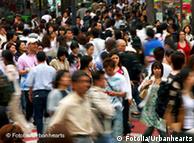
Pedestrians in TokyoBildunterschrift: Großansicht des Bildes mit der Bildunterschrift: Radioactivity levels in Tokyo have already risen

Between 6:00 a.m. (2100 GMT Monday) and 6:15 a.m. an explosion hit the Number 2 reactor of Fukushima Dai-ichi nuclear power plant, a spokesman for Tokyo Electric Power Company (TEPCO) said. By 8:31 a.m., radiation levels there had exceeded eight times the legal limit for exposure in one year.

In a televised address, Japanese Prime Minister Naoto Kan told the nation there had "been a fire at the Number 4 reactor" and that radiation levels in the surrounding area had "heightened significantly."

"We are making every effort to prevent the leak from spreading," he said. "I know that people are very worried but I would like to ask you to act calmly."

Ongoing crisis

The fire has reportedly been extinguished since the prime minister's announcement, according to Japanese media, but the situation surrounding reactor number four remains volatile.

Japanese news agency, Kyodo reported that the water in the containment pool of reactor number four was boiling. If it evaporates, the nuclear fuel rods will be exposed to air, possibly causing them to catch fire and release radioactive material.

Authorities have said that they may use helicopters to pour water into the containment pool in the coming days in an effort to cool it down.

"They've got to get the fires out, keep the fires out and keep the water from boiling," said Murray Jennex, a professor at San Diego State University in California.

Radiation in Tokyo

Experts suggested that radiation drifted 250 kilometers away from Fukushima to the capital, Tokyo on Tuesday.

Authorities detected higher than normal radiation levels in the capital but said they posed no heath threat. Nevertheless, residents have been fleeing the city and shops are reporting panic buying.

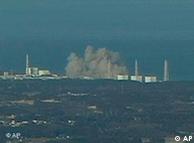
Explosion at FukushimaBildunterschrift: Großansicht des Bildes mit der Bildunterschrift: Four explosions have hit Fukushima's reactors Numerous countries have also imposed flight restrictions to Tokyo. Airlines from Asia and Europe announced on Tuesday that flights to Tokyo will be halted amid fears that radiation had reached the capital.

Lufthansa said planes will be diverted to the Japanese cities of Nagoya and Osaka, hundreds of kilometers west of the capital.

A spokesman for the airline said that the diversion could last until the weekend, adding that flights which returned from Tokyo on Monday had been checked for radioactivity and no traces were found.

Several countries, including Germany, have issued warnings against travel to the country. The German Foreign Ministry website states that "non-essential travel to Japan is inadvisable."

Catastrophe

Japanese markets reacted to the increased concern on Tuesday with the Nikkei Index plunging some 13 percent. The steep decline in share prices over the last two days has wiped some $720 billion (517 billion euros) off the market.

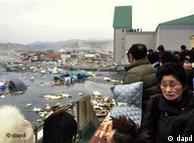
People watching the tsunami in MiyagiBildunterschrift: Großansicht des Bildes mit der Bildunterschrift: Millions are without running water and electricityThere have been a total of four explosions at the Fukushima nuclear power complex in northeastern Japan since it was damaged in Friday's massive earthquake and tsunami. The most recent were blasts at reactors Number 2 and 4 earlier on Tuesday.

Experts say Japan's current nuclear disaster is the world's worst since the 1986 Chernobyl meltdown in Ukraine.

Meanwhile, the full extent of the damage from the earthquake and the resulting tsunami that destroyed the northeastern Miyagi prefecture were still becoming clear. Officials say the death toll could reach over 10,000 people were killed and tens of thousands more were missing as a result of the quake, the world's fourth most powerful since 1900.

Authors: David Levitz, Gregg Benzow, Charlotte Chelsom-Pill (AP, dpa, AFP, Reuters)
Editor: Michael Lawton

2011年3月14日 星期一

亞洲國家武器進口領先


Defense | 14.03.2011

Asian countries lead in global arms imports, says Swedish peace institute

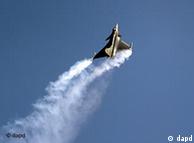
The Swedish research institute SIPRI has published its annual report on global weapons trading. According to SIPRI, India leads the world in arms imports, followed by three other Asian countries.

India is the world's leading nation when it comes to arms imports by volume, according to the Stockholm International Peace Research Institute (SIPRI). New Delhi accounts for 9 percent of all global imports of weapons between 2006 and 2010. Russia provided 82 percent of all weapons exported to India.

Behind India, three other Asian nations topped the list. China and South Korea each account for 6 percent of all arms imports. Pakistan accounted for 5 percent.

SIPRI keeps track of international transfers of weapons. It released an annual update to its Arms Transfer Database on Monday.

One factor contributing to India's leading position in arms imports is the country's desire to keep up with China and Pakistan, SIPRI said.

In terms of regional arms imports, Asia and Oceania were the global leaders, receiving 43 percent of all imports.

Meeting demand

The United States continues to be the global leader in weapons exports, with just under a third of all exports coming from the US. However, the US is facing increasing competition, especially from European countries, to meet the global demand for weapons.

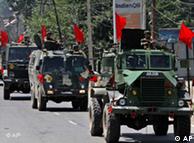
Military trucksBildunterschrift: Großansicht des Bildes mit der Bildunterschrift: India is the global leader in arms imports"There is intense competition between suppliers for big-ticket deals in Asia, the Middle East, North Africa and Latin America," said Paul Holtom, director of the SIPRI Arms Transfers Program, in a statement on the institute's website.

Germany is third among world weapons exporters, representing 11 percent of the global market in 2006 to 2010. The volume of German exports in this period nearly doubled compared to 2001 to 2005. Forty-four percent of German arms exports were ships.

Second-place Russia is far ahead of Germany in terms of weapons exports, with 23 percent of global exports. France is only slightly behind, with 7 percent. The share of French arms exports decreased by one percent compared to the previous period.

North African market

Libya has played a factor in the rising demand for weapons in North Africa and the scramble for suppliers to win contracts there. While Libya placed relatively few orders since a UN arms embargo was lifted in 2003, it did spark competition among major suppliers, SIPRI said.

In February, however, the United Nations Security Council placed fresh restrictions on arms imports to Libya in light of the government's violent crackdown on protests against the government led by Colonel Moammar Gadhafi.

The SIPRI report indicates that the average volume of worldwide arms transfers increased by 24 percent between 2006 and 2010 when compared with the previous four-year period, between 2001 and 2005.

Author: Matt Zuvela
Editor: Nancy Isenson

新闻报道

新闻报道
“这是我们传承民族语言文化的唯一机会”
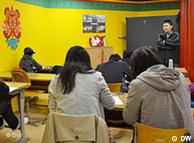
瑞士拥有欧洲最大的藏人社区。在这里几乎所有拥有较大流亡藏人社区的城市乡镇都办有藏人学校。许多藏人家长送子女到那里学习藏语以维护和捍卫本民族的语言文化
[更多]
Audio “这是我们传承民族语言文化的唯一机会”(音频)
^^^
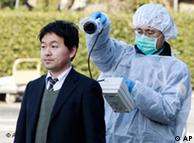
特大地震考验日本国民素质
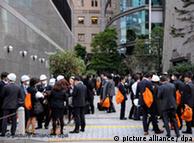
日本"3.11"里氏9级特大地震是日本有史以来最大的地震,造成空前灾难。数据显示,截止3月14日,在地震和海啸中死亡和失踪人数已经超过4500人。面对这场突如其来的天灾,日本社会及民众经受严峻考验。
[更多]
^^^
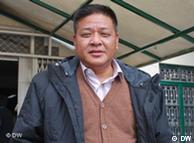
“政府必须存在,因为必须继续抗争”
本周一(3月14日),达赖喇嘛正式请求解除所有政治权力。很多藏人担心,如果没有达赖喇嘛,西藏问题的抗争活动将会搁浅。德国之声记者在印度达兰萨拉与流亡藏人议会的发言人平巴次仁进行了采访。
[更多]
^^^
2011:阿富汗关键的一年
在刚刚结束的北约峰会上,各国同意逐步将安全控制权移交给阿富汗安全力量。该国总统卡尔扎伊将在3月21日公布,哪些省份和城市将完全由阿富汗安全力量接管。2011年对阿富汗来说又是一个关键之年。
[更多]
Audio 2011:阿富汗关键的一年(音频)
^^^
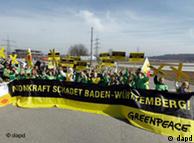
德国政府暂停核电延长计划
日本地震和海啸引发的核电站爆炸事件激发了德国政坛对核安全问题的强烈反响和讨论。本周一(3月14日),联邦政府宣布暂停延长核电站运营期计划。
[更多]
^^^
媒体看中国
"北京无动于衷,依然押宝核能"
德文媒体认为,尽管日本核电站爆炸引起人们对于核能安全的担心,北京依然坚持雄心勃勃的核能发展计划。中国的环保人士越来越多,却鲜有反核能者。中国一再遭受地震袭击,如果发生强震,快速建造的核电站会可靠吗?
[更多]
Audio "北京无动于衷,依然押宝核能"(音频)
^^^
新闻报道
日本政府:三个反应堆的燃料棒可能都已出现融化
3月14日上午,福岛核电站3号反应堆再次发生爆炸。与此同时,东北部沿海镇区的救灾工作进展艰难。东北部海岸发现约2000具尸体,另有一个约万人居民小城全部被海啸冲毁。警方估计,灾难死亡人数将过万。 另据美联社报道,日本官员表示,有迹象显示,福岛核电站三座核反应堆的燃料棒都已经开始融化。周一(3月14日),日本内阁官房长官枝野幸男称,“虽然目前还无法直接进行检查,但这非常有可能发生”。
[更多]
Audio 日本:祸不单行 连遭不幸(音频)