2011年12月10日 星期六

台灣民進黨的三隻小豬傳奇


民進黨上午在台北市凱達格蘭大道舉行「小豬回娘家」活動。


小豬召集令 我想至少數萬人上凱道 公視中晝新聞等有畫面
全省各地小豬豐收.....

約9點57抵達 由賓館進 廣播清道納客 (中山南路)的人潮十倍 進去看30秒小丑表演 知道現在不撤出 一定一整天當"觀眾 " 出 從外交部後方 國家圖書館 羅斯福回 沿途問4家商攤 買韭菜盒等二樣 問津堂等地買書約7冊 碰到讀第8年民族所的朋友......約1130到家

小豬回娘家 擠爆凱道
小豬回娘家!民進黨總統候選人蔡英文相當感動,二度到場答謝民眾的熱情支持 。 (記者劉信德攝)
民進黨的「小豬召集令」昨天在全台各地展開,儘管台北市寒風刺骨,總統府前凱達格蘭大道仍湧入大批人潮,支持者人手一隻餵得飽飽的小豬,冒雨力挺小英。 (記者劉信德攝)

〔記者林恕暉/台北報導〕民進黨的「小豬召集令」活動昨天在全台各地展開,儘管昨天上午台北市寒風刺骨,總統府前凱達格蘭大道仍湧入大批人潮,冒雨力挺小英,支持者高舉小豬搖錢幣響聲震天,「凍蒜」聲浪高漲,讓民進黨總統候選人蔡英文相當感動,二度到場表達感謝。

民進黨估計 湧入五萬人

蔡英文演講時表示,三隻小豬代表的不僅是大家參與台灣民主發展和民主選舉的一份心,更希望藉由小豬的力量來戰勝社會中的不公不義及威權遺緒,「我們要用三隻小豬打倒大怪獸!」她呼籲民眾讓政黨再次輪替,讓台灣走向一個更好的民主、更好的國家。

台 北的小豬召集令活動讓凱道昨天上午被人潮塞爆,不僅凱道兩側人行道擠得水洩不通,大批民眾冒著寒風細雨前往凱道,也讓附近公園路、中山南路景福門擠滿人 群,有多位老人家坐輪椅,在家人陪伴下到場,更有許多父母帶著年幼孩子一起捐撲滿,力挺蔡英文。民進黨估計凱道湧入達五萬人。

為展現嘉年華活動氣氛,民進黨安排小豬特技團表演、藝人豬頭皮的「小豬進行曲」帶動唱,舞台特別不設背景,讓支持者直接遙望總統府。

民進黨安排台北市、新北市各候選人輪番表演,立委高志鵬帶來幼稚園小朋友的快樂小豬團,小朋友小豬服裝的可愛打扮,成為眾人拍照目標;前立委廖本煙身穿超人裝、頭戴小豬帽也相當搶鏡,淡水區立委候選人何博文打扮成變形金剛「柯博文」,取其諧音吸引注意。

人手一豬 冒雨力挺小英

蔡英文圍著小豬領巾到場時,現場支持者高舉小豬撲滿,搖著小豬熱烈迎接,兩隻小豬氣球由群眾後方進入會場,眾人將小豬氣球推向主舞台,象徵要將小豬送給小英、讓小英帶進總統府。

蔡英文演講後,走至舞台兩側及主通道向支持者揮手致意,表達感謝之意。由於支持者非常熱情,蔡英文十點多離場趕行程,一個小時後又返回凱道,上台感謝民眾熱情的小額捐款支持。

由於排隊捐小豬的人潮太多,原先準備兌換的小豬領巾一萬條不夠用,民進黨緊急找廠商再補貨,凱道活動原訂中午十二點結束時,仍無法消化排隊人潮,輔選幹部決定所有排隊者捐完小豬後才撤攤位,使活動又延長一個半小時。

全國各地 約收到七萬隻

蔡英文總部表示,昨天台北市凱道共收到一萬多隻小豬撲滿,全國各地昨天約收到七萬隻小豬撲滿,非常感謝民眾熱情支持。

輔選幹部指出,在凱道回收的一萬多隻小豬撲滿,將暫時存放在板橋全國總部倉庫內,過兩天銀行上班後再清點詳細金額;小英總部的保全人員,將負責維護小豬撲滿安全。

小英各地方總部已經規劃在十八日,將收到的小豬撲滿,以貨車運達板橋全國總部。為展現小豬集合的力量與氣勢,十八日將再舉辦一場活動,凸顯小豬全員集合的熱情,力挺英嘉配打贏明年這場總統選戰。

小豬蔚風潮 小英:打倒大怪獸
民進黨昨在凱道舉辦「小豬回娘家」活動,總統候選人蔡英文走下台親自答謝民眾的熱情支持。 (記者劉信德攝)
支持民進黨的大批群眾昨日頂著寒風細雨,帶著各自的小豬撲滿,前往凱道參加民進黨舉辦的「小豬召集令」活動,支持者將餵得飽飽的小豬串成一排扛上凱道,以實際的行動支持總統候選人蔡英文。 (記者劉信德攝)
支持民進黨的大批群眾昨日頂著寒風細雨,帶著各自的小豬撲滿,前往凱道參加民進黨舉辦的「小豬召集令」活動,總統候選人蔡英文一出現,民眾們紛紛高舉手中的小豬,興奮不已。 (記者叢昌瑾攝)

〔記 者李欣芳/台北報導〕民進黨的「小豬召集令」讓熱情群眾塞爆凱道,民進黨總統候選人蔡英文昨兩度上台演講強調,今天大家都有共同心願,就是「我們趕快讓這 個政府下台!」她批判馬政府做得很差,繼續用一切不正當力量在保衛政權,大怪獸已現出原形,「我們要用三隻小豬打倒大怪獸!」

蔡英文昨上午 十時二十分左右首度上台演講指出,「今天是國際人權日,也是美麗島事件紀念日」,隨著選舉腳步愈來愈近,「大野狼也忍不住了,不再繼續假裝溫良恭儉讓,他 們已經露出真實的面目」,扭曲、醜化,並以司法當工具打擊對手,無所不用其極,這是選舉的奧步,也是民主的墮落。

蔡英文表示,這幾天對手與部分媒體集體打擊她,企圖要謀殺她的人格;宇昌生技的設立,代表台灣生技產業很重要的一環,並為國家賺進十億元,如果這是弊案,馬政府為何要繼續投資這家公司?

她說,顯然馬總統為了迴避執政不力與執政失敗,以抹黑、醜化來移轉執政失敗的焦點;但她相信人民很有智慧,也看得非常清楚,這個政府真的做得很差!

兩度上台 籲讓政黨再輪替

蔡英文表示,小豬的運動已經變成一種風潮,已經變成台灣社會的運動,代表的是台灣走向一個更優質的民主,更重要的是它代表了台灣社會要打倒不公不義和威權遺緒,「這種東西我們叫它大怪獸」。

她呼籲大家團結起來,用小豬的力量、人民的意志,明年一月十四日一起改變台灣,換一個政府,讓政黨再次輪替。

蔡英文演講完後,民眾爭相與她握手,紛紛搖起小豬,並高喊「小英,凍蒜!」

近 中午時分,小英在新生南路公務人力發展中心參與勞工顧問團成立後趕回凱道,二度上台向民眾致謝。她表示,原以為重回凱道人會變少,但反而更多人,她感謝現 場群眾,天氣這麼冷,又下雨,卻熱情相挺,「我知道,小豬的意義代表著大家的期待」,期待民進黨替大家做許多事,包括縮短貧富差距、照顧弱勢、快速建立內 需產業,使中產階級貧窮化問題不再繼續惡化。

她說,今天大家在一起,都有共同的心願,就是「我們趕快讓這個政府下台!」也要讓這個社會更有公平正義與和諧。

台下群眾不斷高喊「總統好!」回應小英,蔡英文高興地說:「謝謝,跟你們在一起的感覺真好!」大家就這樣持續到勝選,一直到台灣恢復元氣,變得更好。

今天民進黨在凱道發起小豬召集令,......有人還在豬的身上寫下願望,希望生活要安定。一位先生還把小豬撲滿疊成一顆聖誕樹,用推車推來堪稱全場最顯眼也最有創意。扛著一大布袋小豬的民眾,他可是代替全家人來的,從嘉義三胞胎姊妹捐三隻小 豬開始,民進黨發起小豬運動發出去的豬現在收回來,可以換到小豬毛巾。在細雨中耐心排隊等待,希望能把這股氣勢延續到大選那一天。

蘋論:小豬盛況不是偶然

前天蔡英文的小豬回娘家,群眾擠在凱達格蘭大道搖動小豬撲滿高喊凍蒜,給近來飽受藍營以宇昌案攻擊的蔡英文,滿懷的溫暖。

昔拒絕貼畜生標籤

三隻小豬偶然成為蔡的吉祥物,且一發不可收拾,竟無意間蔚為風潮,是本次大選最令人意外的驚奇。但是,從文化的角度看,並非偶然,而是台灣的動物倫理文化已經到了這個地步,以致可以順水推舟,而且水到渠成。


台灣農業時代的動物觀是人與動物的二元對立觀,人急於棄絕自己的動物身分,因此在思考動物與人類關係時,大多認為「我們」若替「牠們」爭取權益,就是對我們的傷害;動物天生就是以成為我們食物的價值而存在。就人類而言,對動物的態度只有歧視與敵視。


從語言來看,歧視、敵視動物的語詞極多,像是狼心狗肺、狼子野心、豬頭狗臉、狡兔死走狗烹、笨的像豬、過街老鼠、鼠肚雞腸、獐頭鼠目、熊心豹膽、潑猴、懶驢……,對動物的歧視來自於我們比牠們聰明的優越感,而敵視則源於遠古時人們常遭動物傷害的「祖先記憶」。
此外,動物做為人類的食物而存在,也至少4百萬年,對吃的食物有必要建立倫理關係嗎?

從敵對進步到寵愛

20多年前如果蔡拿三隻小豬當作大選吉祥物,必定遭人恥笑為笨豬、臭豬、懶豬而難以接受。現在,三隻小豬既是對抗大野狼(國民黨)的隱喻,也讓人覺得可愛、有趣,比毫無生命的平安符高明多了。
台灣這10多年來,自發性學習了西方的公共道德、公共意識等公民社會的元素,其中與動物的關係得到深遠的改進,從農業時代的歧視、敵視動物,到現代社會的愛護動物、與動物平等相處,其間轉變就像從不排隊到自發性排隊,那樣經過長久的努力。


就算宰殺家禽、牛、豬、羊、魚、蝦等,也不先虐待之後才動手,而宰殺的科學工具也盡量往減少動物的痛苦為方向設計,並且心中暗唸佛號為之超渡。


當代動物倫理學者相信,那些虐待動物的人,也會虐待人;一個民族怎麼對待動物,就會怎麼對待人。


台灣進步到美化動物、關愛動物(看看多少人寵愛養的貓狗),而非歧視、敵視動物的「和諧社會」,才有蔡英文拿小豬當吉祥物的結果。三隻小豬是偶然嗎?非也!

Taiwan opposition builds campaign with shiny, tiny piggy banks in bid to unseat President Ma

( Wally Santana / Associated Press ) - In this photo taken on Nov. 11, 2011, a campaign volunteer, right, helps a supporter add coins to a “Piggy Bank” at the opposition Democratic Progressive Party’s 2012 presidential candidate Tsai Ing-wen’s campaign headquarters in Banciao, northern Taiwan. Inspired by the popular fairy tale “The Three Little Pigs,” the party has won over tens of thousands of supporters with the campaign, which encourages people to make donations to the party in colorful, plastic piggy banks.

  • ( Wally Santana / Associated Press ) - In this photo taken on Nov. 11, 2011, a campaign volunteer, right, helps a supporter add coins to a “Piggy Bank” at the opposition Democratic Progressive Party’s 2012 presidential candidate Tsai Ing-wen’s campaign headquarters in Banciao, northern Taiwan. Inspired by the popular fairy tale “The Three Little Pigs,” the party has won over tens of thousands of supporters with the campaign, which encourages people to make donations to the party in colorful, plastic piggy banks.
  • ( Wally Santana / Associated Press ) - In this photo taken on Nov. 11, 2011, a campaign volunteer seals a “Piggy Bank” containing donations at the opposition Democratic Progressive Party’s 2012 presidential candidate Tsai Ing-wen’s campaign headquarters in Banciao, northern Taiwan. Inspired by the popular fairy tale “The Three Little Pigs,” the party has won over tens of thousands of supporters with the campaign, which encourages people to make donations to the party in colorful, plastic piggy banks.
  • ( Wally Santana / Associated Press ) - In this photo taken on Nov. 11, 2011, supporters add coins to a “Piggy Bank” at the opposition Democratic Progressive Party’s 2012 presidential candidate Tsai Ing-wen’s campaign headquarters in Banciao, northern Taiwan. Inspired by the popular fairy tale “The Three Little Pigs,” the party has won over tens of thousands of supporters with the campaign, which encourages people to make donations to the party in colorful, plastic piggy banks.
  • ( Wally Santana / Associated Press ) - In this photo taken on Nov. 11, 2011, campaign volunteers watch a supporter add coins to a “Piggy Bank” at the opposition Democratic Progressive Party’s 2012 presidential candidate Tsai Ing-wen’s campaign headquarters in Banciao, northern Taiwan. Inspired by the popular fairy tale “The Three Little Pigs,” the party has won over tens of thousands of supporters with the campaign, which encourages people to make donations to the party in colorful, plastic piggy banks.

TAIPEI, Taiwan — It started early last month, when a Taiwanese boy handed his coin-filled piggy bank to the opposition candidate for president, only to have the government declare the donation illegal because minors are prohibited from involvement in political campaigns.

That gave rise to the Democratic Progressive Party’s “Three Little Pigs” movement, which is now sweeping this island of 23 million people.


With a nod to the fairy tale, the DPP has been handing out hamster-sized, plastic piggy banks in shiny oranges and reds. The idea is that by banding together to make small donations, tens of thousands of economically challenged workers and farmers can overcome the big bad wolf of Taiwanese corporate power and defeat incumbent Ma Ying-jeou and his supposedly capitalist cronies in the Jan. 14 presidential poll.

The piggy campaign is a salient reminder that not all Taiwanese politics revolves around the island’s complex relationship with China, from which it split amid civil war in 1949. While that issue tends to garner the most interest abroad, Taiwanese themselves are usually more concerned with bread-and-butter questions such as wages, inflation and jobs.

Taiwan’s economy has fared relatively well in recent years, avoiding the slow growth syndrome that has afflicted most of the West. But complaints over rising income inequality have been mounting, fueled by a residential building boom that seems largely reserved for high-wage earners and a shift in the labor market that appears to punish relatively unskilled or undereducated workers.

That has provided a big political opening for Tsai Ing-wen, the 54-year-old DPP presidential candidate, and the star of the suddenly trendy piggy bank campaign.

Scion of a wealthy family, the soft-spoken Tsai has been transformed almost overnight from a wonkish intellectual whose privileged background allowed her to study abroad, into a Robin Hood-like heroine committed to lifting the poor from the hardships of life.

“She is so extraordinary,” said 63-year-old welfare recipient Bei Ling, who lives with her husband in the Taipei working-class suburb of Banciao. “Whenever we see her on TV we are moved to tears.”

Even Ma supporters — and latest polls still give him a razor-thin lead over Tsai — acknowledge that he can’t compete with her in the garnering-love-from-the-masses department.

Since taking office 3 1/2 years ago, the 61-year-old Ma has won plaudits for helping Taiwan navigate through the global financial crisis, but has been widely criticized for his perceived inability to address the interests of blue-collar workers, farmers and others less well-off, and for his seeming lack of human empathy. Like Tsai, he comes from a well-connected family whose privileged status helped underwrite his foreign education.

Tsai has worked hard at exploiting Ma’s supposed weaknesses.

Clad in simple clothes and sometimes wearing a farmer’s traditional straw hat, she has visited countless rural villages and working-class districts, chatting with farmers and laborers in front of countless television cameras, to burnish her populist credentials.

Now, with the piggy campaign in full swing, she is inundated almost everywhere she goes with supporters presenting her with piggy banks stuffed with modest amounts of cash.

Tsai’s cause is being helped by mounting public criticism of government waste, which resurfaced late last month following revelations that officials spent $7 million on a glitzy National Day production that was paid little attention.

Political commentator Hu Wen-hui of the pro-DPP Liberty Times newspaper wrote that with scandals like this, it’s no surprise the race is extremely tight.

“Millions of piggies are showing their anger against the Ma government,” Hu wrote. “They embody a demand for revolutionary change.”

Premier Wu Den-yih, Ma’s vice-presidential running mate, said the piggies’ innocent image did not reflect the true face of the DPP and its well-born presidential candidate.

“You don’t turn a remote person into an approachable one just by giving her a piggy,” he said.

Former DPP lawmaker Lin Cho-shui disagreed, saying the success of the piggy campaign reflected mounting popular unease over income inequality and rising unemployment.

“With middle and worker-class livelihoods under threat,” he said, “it has fed into a collective social anxiety.”

這次的環保小豬撲滿,材料都是可再次利用的回收物,小豬的身體是寶特瓶做的,眼睛是瓶蓋黏貼而成,還可以用吸管來做豬尾,特別的是連蛤蠣殼也可以當眼睛, 沒有任何一樣材料需要另外購買,絕對不會造成環境污染,自製創意小豬不但隨手可得,還可以在製作過程中享受親子同樂的樂趣。

陳亭妃說,民進黨的小豬回娘家召集令訂在12月10號,當天民眾可帶著餵飽的小豬前往各競選總部集合,就可獲得一條小豬花樣領巾,當作支持蔡英文的紀念,當天有事無法前往的民眾也不用擔心,12月11號之後一樣可以把小豬繳回各競選總部。


三隻小豬抗馬 華郵:小英變女羅賓漢


自由時報 - 1 天前
〔編譯陳泓達、林恕暉/綜合報導〕民進黨集結人民力量颳起的三隻小豬募款旋風,引起國外媒體關注,美國華盛頓郵報轉載美聯社報導,以「台灣反對黨以小豬撲滿打選戰, ...

小英:小豬募款 我募大家的心

民進黨總統參選人蔡英文(中)昨天出席全國扶輪之友小英後援會成立大會,與後援會幹部手牽手高呼口號。(記者簡榮豐攝)
民進黨總統參選人蔡英文昨天出席全國扶輪之友小英後援會成立大會,與會來賓高舉小豬撲滿加油。(記者簡榮豐攝)

〔記 者林恕暉/台北報導〕民進黨總統參選人蔡英文昨晚參加全國扶輪之友小英後援會成立餐會時表示,總統選戰對國民黨而言是政權保衛戰,但對人民而言,台灣必須 跳出惡性循環、恢復元氣,民進黨知道面對未來的方法在哪裡,也比以前更有理性,她有能力、也有決心,把台灣建設成充滿朝氣的國家。

逾四千扶輪社友力挺小英

全國扶輪之友小英後援會昨晚在台北市成立,主辦單位在世貿三館席開四百多桌,來自全國各地的四千多名扶輪社友力挺蔡英文,規模之大,堪稱台北市近十年最大型的室內造勢餐會。

扶 輪之友小英後援會總會長陳茂仁昨天也贈送一幅繪製可愛豬小妹的「吉祥豬」作品給蔡英文,令蔡英文哈哈大笑;主辦單位也發放小豬撲滿給扶輪社友,使會場內人 手一隻小豬撲滿,小豬撲滿內放置零錢後,更具有加油棒功能,四千多人高舉小豬撲滿高喊「凍蒜」,氣勢十足。蔡英文說,這是她第一次看到這麼多隻小豬在一 起。

蔡英文表示,我們國家面臨債務快速累積,貧富差距擴大,很多人找不到工作,物價上漲,大家都覺得不公平,但司法沒有被信賴,人民面臨集體的無力感。總統選戰對國民黨而言是政權保衛戰,但對人民而言,台灣必須跳出惡性循環、必須恢復元氣。

蔡英文說,民進黨從二○○八年後做了很多政策檢討,才能快速恢復生氣,民進黨提出十年政綱,知道面對未來的方法在哪裡,也比以前更有理性。

蔡英文指出,剩下六十天投票,將是最激烈的選戰,她將保持理性、冷靜面對選戰,面對一個有龐大黨產的政黨,她相信只要保持熱情,以小豬撲滿讓熱情加溫,「小豬募的是錢,我募的是大家的心」,她要與大家一起達成公平正義的目標,她相信這樣一定就能打贏選戰。

蔡英文昨也與各地家具業公會代表座談。陳姓家具業者指出,家具業生意一年比一年差,三十年前台灣是家具王國,產業外移後,仍有不少家具業者願意持續留下來打拚,但政府卻不重視。

蔡英文表示,新莊、五股、泰山地區已經成為台灣重要的家具聚落,她未來會與經濟部研究處理這件事,尤其家具業是重要的內需產業,未來她將強化這個聚落的功能,包括研發、設計,讓新產品能被開發,使台灣家具能與外國家具競爭。她強調,「務必維持這個聚落」。

英嘉配23日辦理參選登記

蔡英文競選總部也宣布將在十一月二十三日登記參選總統副總統,當天上午蔡英文將於板橋全國總部發表演說,隨後將搭乘小英巴士前往中選會辦理參選登記。


----


2011年12月6日 星期二

日本核污染清理意見兩極/ 繼續出口核技術/上海罷工/前僧侶在西藏自焚/


TEPCO: Melted fuel eroded containment vessel floor at Fukushima reactor2011/12/02


photoThe No. 1 reactor building of the Fukushima No. 1 nuclear power plant (Asahi Shimbun file photo)

Most of the fuel rods that melted in the pressure vessel of the No. 1 reactor of the stricken Fukushima nuclear power plant dripped into the containment vessel and ate into it, according to Tokyo Electric Power Co.

Cesium-137 deposits 50 times more than previous record

December 02, 2011

By YUMI NAKAYAMA / Staff Writer

TSUKUBA, Ibaraki Prefecture--Nearly 30,000 becquerels per square meter of cesium-137 fell on Tsukuba in March as a result of the accident at the Fukushima No. 1 nuclear power plant, the government's Meteorological Research Institute said Dec. 1.

The amount was 50 times higher than the previous record level of 550 becquerels, which was measured in Tokyo in 1963 and was the result of deposits from atmospheric nuclear tests.

The MRI, affiliated with the Japan Meteorological Agency, said the cesium-137 deposits in Tsukuba in April fell to less than one-tenth the March level, and by summer fell further to several tens of becquerels per square meter, approximately the same levels found in the aftermath of the 1986 Chernobyl accident, researchers said.

"It may take decades for the figures to come down to levels before the Fukushima accident," said Yasuhito Igarashi, a laboratory head at the MRI's Atmospheric Environment and Applied Meteorology Research Department.

Meanwhile, analysis of seawater collected in April and May found that radioactive substances spewed by the stricken Fukushima No. 1 plant fell over broad areas in the North Pacific. Fallout was also detected near the West Coast of the United States.

The research institute estimated that the Fukushima plant discharged at least 3,500 trillion becquerels each of cesium-137 and cesium-134 into the ocean. It forecast that the radioactive material will spread east across the North Pacific on surface ocean current before drifting southwest on deeper ocean currents. Part of the radioactive materials carried by mid-depth ocean currents will return to seas near Japan's coast in 20-30 years, the scientists said.

"Continual surveys are necessary across all areas of the North Pacific," said Michio Aoyama, a laboratory head at the MRI's Geochemical Research Department.

The MRI has been engaged in radioactivity measurements since 1954.

On March 31, the budget for fiscal 2011, which was to start the next day, was abruptly frozen, and the researchers were told to suspend the measurements. The latest findings are a fruit of efforts by scientists who ignored that order and continued with the measurements.

By YUMI NAKAYAMA / Staff Write


The Meteorological Research Agency in Tsukuba, Ibaraki Prefecture (Yumi Nakayama)

The Meteorological Research Agency in Tsukuba, Ibaraki Prefecture (Yumi Nakayama)

Toggle
  • The Meteorological Research Agency in Tsukuba, Ibaraki Prefecture (Yumi Nakayama)

In meltdown, Japan dodged even bigger disaster

By
Lucy Craft
(CBS News)

It turned out that the disaster at Japan's Fukushima Dai-ichi power plant was much worse than was first thought. After last spring's tsunami, one reactor suffered a meltdown. CBS News correspondent Lucy Craft details how close it came to burning into the earth.

Recently, reporters got their first look at the devastation left in the wake of the accident, with heavily reinforced buildings torn to shreds after a series of meltdowns and explosions, But as CBS News found out this week, the damage was even worse: Rector 1 almost had a full meltdown.

A new report revealed that molten nuclear fuel burned through the 8-foot concrete walls of the first protective casing surrounding the reactor's core, and then ate 3/4 of the way through the second casing.

The meltdown stopped within a foot of the container's steel bottom, 25 feet above the earth's surface.

Masanori Naitoh is a nuclear engineer who has reviewed the plant's findings. "It was a close call," he said. "The meltdown may have been even worse. But we can say the containment held."

Video: Fukushima: A look inside with reporters
Japan faces years of food contamination fears

Video: Radiation threats linger over Japan's food supply

Held, according to the report, because of the huge efforts to dump a continuous flood of seawater on the reactors to cool the nuclear cores. If it had burned through, it would have contaminated the ground water and the soil. No one knows how far it would have spread.

One man who experienced the accident firsthand was Yukio Takayama, a veteran firefighter who was sent to Fukushima six days after the accident.

He said: "It reminded me of a haunted house -- total silence, billowing smoke, eerie. With fires, you can feel the heat or smell the gas. At Fukushima, it was all the more frightening, because the danger was invisible."

So far, he has no signs of radiation poisoning. Nor do any of the other 32 members of his squad. But at the time, they weren't sure they'd come back alive. And they didn't believe the government's assurances.

"The TV was saying, there was no meltdown, no radiation leaks, nothing to worry about," Takayama recalled. "But when you saw the damage, you knew this was no ordinary accident."

The plant's operator says it is on schedule for a "cold shutdown" by the end of this year -- that's when fuel has cooled enough to no longer pose a threat. But it's a long process. Dismantling the reactor and cleaning up the plant could take 30 years.


波恩國際阿富汗會議旨在發出積極信號
柏林定於下週一(12月5日)召開的波恩國際阿富汗會議旨在為國際社會長期支持該國製定大政方針。這是繼2001年後,在德國波恩召開的第二次阿富汗問題國際會議。德國聯邦政府發言人塞貝特(Steffen Seibe​​rt)週五(12月2日)在柏林表示,會議的主要議題之一是2014年底國際部隊全部撤離後阿富汗的發展。 90多個國家的代表將出席會議。為凸顯此次會議的重要意義,聯邦德國總理默克爾將同聯合國秘書長潘基文和阿富汗總統卡爾扎伊一起主持開幕式。作為東道主,德國政府仍繼續做出努力,說服巴基斯坦參加會議。德國外長韋斯特韋勒承認,如果作為阿富汗重要鄰邦的巴基斯坦缺席,意味著地區和平努力的"挫折"。

日本將繼續出口核技術
東京雖然發生福島核災難,日本仍將出口核技術。據該國媒體報導,野田佳彥首相週五(12月2日)在議會一個委員會上作證時表示,日本將繼續在和平利用核能的前提下向其他國家出口核技術。儘管本國民眾對核電安全有強烈擔憂,日本國會仍將於本月批准同約旦、俄羅斯、韓國和越南等國家之間的雙邊和平利用核技術合作協定,從而為日本企業出口核技術奠定法律基礎。同這四個國家之間的相關合作協定是在福島核災難前簽訂的。
中國副外長:我們的錢並非用來救歐洲
北京據路透社報導,在同債務危機的鬥爭中,歐元區國家不能指望擁有3.2萬億美元外匯儲備的中國會出大氣力拯救它們。中國副外長傅瑩週五(12月2日)在題為"新形勢下的中歐關係"的論壇上發言指出,關於中國應拯救歐洲的要求並不成熟,在中國如何使用其外匯儲備方面,歐洲人或許有誤會。傅瑩在講話中雖未斷然排除中國使用部分外匯用於更具目的性措施的可能性,但明確指出,中國不會大量動用本國資金,用於幫助歐元國家。作為當今全球第一大外匯儲備國的中國,外匯儲備量約值2.3萬億歐元,其中一大部分以現金方式儲備,用以應對國內緊急情況;另一大部分用以長期投資。如果中方大量出售這部分儲備,有可能引發國際金融市場動盪。根據專家的估計,中國動用外匯儲備的活動空間約在每年1000億美元上下。

一名前僧侶在西藏自焚
北京據德新社報導,出於對北京統治西藏的抗議,一名前藏族僧侶在昌都自焚。據流亡藏人組織和美國自由亞洲電台週五(12月2日)報導,46歲的前噶瑪寺僧侶丹增平措(Tensin Phuntsog)昨天點火自焚。自焚前,他曾散發傳單、呼喊口號。在場的警察撲滅了他身上的火焰,並將已被嚴重燒傷的他送往醫院治療。今年10月26日,噶瑪寺所在的昌都地區的一個政府機構前發生炸彈爆炸事件。從那以來,噶瑪寺受到警方嚴密監控。丹增平措成為今年以來藏族地區自焚抗議的第12人,同時是在西藏本地自焚的第一人。北京當局指控流亡藏人組織策動了自焚行動,但遭到這些組織的駁斥。美國國務院近日對中國境內一再發生藏人自焚抗議事件表示關注,並指出,自焚行為清晰地顯示了行為者對中國國內藏族人權、宗教自由遭受嚴重侵犯的害怕和絕望。

上海發生千人罷工事件
上海據法新社報導,因抗議裁員,上海一家電子工廠一千多名職工進行罷工。據總部位於美國的人權組織“中國勞工觀察”週五(12月2日)通報,罷工已進入第二天。在同警方的衝突中,有多名工人受傷。該廠隸屬新加坡的電子集團公司“赫比國際(Hi-P International)”。該廠新近裁員千人,原因是,生產線將遷至毗鄰的蘇州。中國勞工觀察指出,罷工者指出,他們在沒有接到任何預告的情況下就失去了工作,並且沒有獲得恰當賠償。中國國內近來罷工事件越來越頻繁,勞工自我意識增強,對雇主提出更高要求。雇主方面則苦於金融危機導致的成本增加、出口減少等問題。上個月,廣東一家工廠的7000名僱員罷工,抗議削減薪水和裁員,並與警方發生衝突。該廠生產阿迪達斯斯和耐克等品牌產品。


日本大規模核污染清理意見兩極Japan Split on Hope for Vast Radiati...

蔡英文在彰化12/5 : 要贏5萬票!

我今天多與1926年的胡適法英德法之旅打交道
由於我對英國有點資料 所以可以復原一日胡適遺失一半的日記
這是書齋的玩藝
感謝陳先生報導他昨晚在彰化和美的體驗報導


****
Chen Weilly
5:34 PM (21 minutes ago)

to me
My personal experience. Very interesting.
________
昨天(12/5)去參加了蔡英文在彰化和美鎮的台17線造勢活動.因為傍晚下大雨,想說可能沒什麼人吧?結果出乎意料之外人還滿多的.原來是有至少5部遊覽車載附近鄉鎮的阿公阿嬤來. 整個會場坐得滿滿,差不多有8~900人.應該算是很多人了吧?看起來參加者年齡偏大一些(就連我的年齡也算即將有參選總統的資格了啊),可能是農業縣,或者年輕人已經不時興參加這樣的造勢晚

晚會都是演講, 地方上民進黨籍的各級民意代表都有來,立委參選人也有來,還有特別來賓莊瑞雄,蘇嘉全和蔡英文.

蔡英文到的時候,大家都很興奮,她一上台好像有點靦腆,像個小孩子說"哇!人好多!",大家熱情地給她鼓掌,喊"凍蒜".
⋯⋯
上台的人演講的用詞遣字雖然盡量口語化,但是講的內容都還滿正面的.(好啦!只有莊瑞雄的口味重一點,一直罵馬政府夭壽),就是講自己的政策內容.老農津貼當然是一定要的, 還有比方說要把台中和彰化合為一個在地生活圈,建立一個會展中心.要樽節不必要的支出(蔡說馬政府3年舉債1兆2千億)投入教育,發展在地經濟, 發展科技與科學,發展長期照護體系,照顧小孩與老人.她像唱片跳針一樣一直講說台灣社會一定要和諧與團結才能面對接下來10年/20年的挑戰.

我還真的沒預期會聽到這麼正面的講話.

整個造勢晚會就是政見發表會,灑狗血的部分比政論節目還要少很多.幾乎沒有.跟我印象中的民進黨造勢晚會差很多.以前好像都會放"勇敢的台灣人","雨夜花","母親的名字叫台灣"這類很悲情的歌.今晚完全沒聽到.

很妙的是,蔡英文講這些的時候下面好像真的有在聽呢.但是蔡的台語不太好,表達起來有點吃力.我想要是蘇貞昌講起來可能會很生動.

我覺得蔡英文氣勢與氣色都不錯哦!有當年陳水扁第一次選台北市長那個"快樂/希望"的fu.難怪她的三隻小豬會很成功.就是有一種願景在帶動的感覺.完全沒有悲情, 完全沒有"國民黨壓迫台灣人50年"這種情緒宣洩.

昨晚是個很有趣的選舉造勢之夜呢!

***


要贏5萬票! 蔡英文在彰化喊話

【台 灣醒報記者章文台北報導】民進黨總統參選人蔡英文昨天在溪湖、二林、和美連趕三場造勢活動中喊出:「希望在彰化縣贏5萬票」,台下支持者大喊「要贏10萬 票啦!」情緒沸騰。蔡英文今天上午九點半即在彰化鹿港天后宮造勢,十點在市區車隊掃街。中午到王功做蚵仔文化體驗,晚上則回到台北出席在板橋縣民大道二段 的律師後援會成立大會。

蔡英文說,政府需要一個會勤儉持家的人,她擔任民進黨主席,解決了民進黨負債問題,她相信自己是人民最好的選擇;如果民進黨再度執政,一定會重新檢查政府預算,優先用來發展科技、照顧弱勢等。

蔡英文在溪湖鎮為立委參選人江昭儀、魏明谷助選,她說,總統選舉,彰化縣一定要過半,民進黨的總統選舉就贏了啦,因為關鍵選區就在彰化。若她當選,要鼓勵到外地投資成功的彰化人再回家鄉投資,讓企業再回家鄉。

她也說,一個政府不能一直說經濟成長有多少,但大家還是找不到工作,因為有一半出口品是在國外做的,而是應讓出口品儘量在台灣生產才有工作機會。她 也在二林鎮為「二林小英之友會」造勢,蔡英文說,二林鎮是台灣農民運動發跡之地,許多民主前輩出身二林,是她熟悉、溫暖的地方。

晚間她又與副手蘇嘉全參加和美競選總部成立晚會,蔡英文說,面對即將來臨的總統及立委大選,中部地區具有關鍵地位,她呼籲台下的群眾們不僅票投民進 黨,每個人也要幫忙拉票。在長達1公尺的特大號小豬撲滿上簽名。蔡英文數度問,明年總統換姓蔡的來當,好不好?換人執政好不好?支持者大聲回答「好!」

蔡英文說,聽到「有力」的回答,她的感覺真的很好,相信彰化縣她會贏,而且要贏5萬票以上。

2011年12月5日 星期一

請留台北台中和太魯閣一線生機:給你們101億

2009/5/17:Taiwanese march against president

Taiwan's former Vice-President Annette Lu, centre, leads thousands of opposition protesters in a mass rally in Taipei, Taiwan, 17 May 2009
Tens of thousands of demonstrators took to the streets of Taipei

forefront, liberalization, Taiwanese march agains...


蘋論:太魯閣蓋劇場 有沒搞錯

當一個地方首長胸無點墨、不學無術,就會想要興建政治符號式的高大建物,反映他的好大喜功及愚蠢落後。西方在上世紀中葉以後已覺悟,不再興建如巴黎鐵塔等象徵工業時代的冰冷建築。杜拜的哈里發塔雖遠比台北101美觀雄偉,但只有石油暴發戶還在做全球最高迷夢,表現暴富的虛榮。紐約已決定在世貿雙子星廢墟上建立表現謙卑的建築,比原世貿大樓矮很多。

大自然美景蒙糞

一個名為「邱董的老台北家鄉味」的部落格問說:「台北需要大巨蛋嗎?台中需要台灣塔嗎?太魯閣需要旋轉劇場嗎?」並在文章中寫到:「胡志強說要花60億蓋一座台灣塔,我想就跟縣市長一樣,卸任前會蓋燈柱……胡市長也要為自己立碑;我並不認為太魯閣山水的魅力會輸給一座30億元劇場,且人造建築對自然景觀的破壞很難再恢復……」


為什麼地方首長都想要蓋大型建築?是誰得利?毫無疑問是營建業大獲其利。營建業獲利會回饋給誰?用膝蓋想就知道,就不必再問下去。此外,歷史留名的虛榮是政客僅次於獲利之外最難抵抗的誘惑。至於官員們吹的什麼地標識別性、代表一國營建技術水準、台中縣市合併後的精神象徵、具有觀光功能云云,全是狗屁。


台北大巨蛋、台中台灣塔,這兩個「蛋塔」在21世紀重生態、反開發的趨勢下,會變成被批評、嘲笑、嗤之以鼻的對象,就像十幾年前蛋塔流行過一段短 時間那樣無聊。不過那一蛋一塔還勉強可以接受,反正在很醜的都市裡胡整,麻臉上生個醜鼻子也不算太突兀,破壞不了什麼自然美景。可是,太魯閣卻是大自然送 給台灣的絕美至寶,在那建造劇場就叫做佛頭蒙糞、廟裡放屁、焚琴煮鶴,極為俗氣掃興。不知是哪位官老爺的構想,我們大家湊筆錢,在他官邸門口蓋個公廁,如 何?

砸30億肥了官商

每年都在太魯閣的山谷裡舉辦露天古典音 樂會,年年座無虛席。來賓免費入座,在鬼斧神工的壯麗美景中,傾聽縹緲仙樂,直至暮靄四合。歐美也有很多露天音樂場地,洛杉磯的好萊塢(碗)就在山谷裡, 每年7、8月天天晚上看星星聽音樂會,沒有人要在那裡蓋劇場。太魯閣六座圓形旋轉劇場要砸30億元,不知肥了多少官商。這樣吧,全民加號召國際捐30億元 餵飽當地官商,請留太魯閣一線生機,好嗎?

2011年12月3日 星期六

蔡英文強調要換政黨執政,換總統領導,台灣需要能關造全局的領導人


蔡英文謙卑聽人民聲音 盼「挫折中再起」

2012年總統大選首場電視辯論結論,民進黨總統候選人蔡英文以感性為訴求,強調2008年民進黨歷經挫敗,經過反省才能重新站起來,她強調「人民的聲音她都聽到了」,希望台灣鄉親給蔡英文機會重新站起來。

蔡英文以電影《海角七号》為例,指電影中的角色歷經挫敗重新站起來,更能面對未來的挑戰。她說民進黨2008年歷經挫敗,經過深刻反省、謙卑學習,重新站起來。她說競選團隊靠民眾5塊錢、10塊錢捐款資助,她們更懂得傾聽人民聲音,更懂得關懷弱勢。

蔡英文說過去4年貧富差距拉大,中產階級貧窮化,造成1個台灣2個世界,台灣主權尊嚴受到霸凌傷害,國旗國號走不出去,拿不出來,她強調要換政黨執政,換總統領導,台灣需要能關造全局的領導人,面對世界有利協商創造空間,面對中國堅守國家主權,務實協商不影響國家大局。


Campaigning in Taiwan

Of pigs and persimmons

For once, China is not the focus of an election campaign

This little piggy went to the fruit market

TAIWAN’S president, Ma Ying-jeou, facing an unexpectedly tough battle for re-election in January, has been devoting unusual attention to the woes of the island’s persimmon farmers. Handling relations with China has often been the most bitterly contested issue in Taiwanese politics. But with cross-strait relations now much improved and worries about the island’s economy growing, Taiwan’s political focus has shifted. China too, though concerned that the relatively conciliatory Mr Ma might lose, appears preoccupied with affairs at home.

Despite this shift, Taiwanese politics has lost little of its rancour. In the past few days, Mr Ma and his party, the Kuomintang (KMT), have been squabbling bitterly with the opposition Democratic Progressive Party (DPP) and its leader, Tsai Ing-wen, over the key question of persimmons. Mr Ma has accused the DPP of causing “terror” among persimmon farmers by saying in its campaign literature that the price of the fleshy, orange fruit had slumped. This, he said, had caused people to shun vendors selling the fruit at their actual, much higher, price. The DPP denied charges of being ill informed and heartless, but to push his point home, Mr Ma visited a wholesale fruit market in the Greater Taichung area of central Taiwan, where he pledged to buy five tonnes of persimmons for distribution to Taichung’s needy.

In the build-up to no less suspenseful presidential elections in 2000 and 2004, the two main parties engaged in more momentous struggles over the island’s identity, fuelled by threats from China. Both those elections were won by the DPP’s Chen Shui-bian. By the time of the elections in 2008, the DPP’s popularity had plunged and few doubted that Mr Ma would win (Mr Chen has since been jailed for corruption). But a simultaneous referendum in 2008, engineered by the departing Mr Chen on whether Taiwan should apply to join the UN, ensured more fierce debate about how to deal with China.

The DPP has now switched tactics. Ms Tsai, despite having served as the government’s top official responsible for China relations during Mr Chen’s presidency, has largely avoided pushing her party’s traditional line about the island’s separateness from China. Hsiao Bi-khim, a DPP spokeswoman, says one thing the party has learned is that cross-strait relations need to be handled through “consensus-building” instead of as a “divisive campaigning tool”. Ms Tsai has said she will not scrap a free-trade deal signed with China last year, despite her party’s formerly strong condemnation of it.

But China is likely to be anxious about Ms Tsai’s rejection of what is commonly referred to as the “1992 consensus”, which the KMT says was an understanding that the two sides would uphold the idea of “one China”, but agree to disagree about what this means. This consensus (though the DPP insists there never was one) formed the basis of China’s decision to reach agreements with Mr Ma’s administration on such issues as trade, the start of cross-strait flights and allowing Chinese tourists to visit the island. But few expect these accords to unravel. China sees them as useful tools for boosting its influence in Taiwan. And as China prepares for sweeping leadership changes late next year, many in Taiwan believe it is unlikely to be in a mood for conflict.

Gaining voter support in Taichung and neighbouring counties is regarded by both parties as a crucial test of their ability to win overall, both in the presidential polls on January 14th and in elections on the same day for the national parliament. The region is a buffer between the DPP’s stronghold in the south of the island and the KMT’s in the north. Mr Ma’s decision to go there to investigate persimmon prices was an attempt to win over its farming community, which the DPP has been assiduously courting. Ms Tsai chose as her running-mate a former minister of agriculture, Su Jia-chyuan, who is popular in the area.

To encourage support from farmers and other less-affluent citizens (and poke at the KMT’s big-business associations), the DPP has been deploying plastic piggy banks. It has distributed some 200,000 of them and urged people to fill them with small donations to the party that will be handed over in a mass-emptying outside the presidential palace in Taipei on December 10th. The brightly coloured little objects appear to be in demand. “If we win, it will be on the back of a piggy revolution”, says the DPP’s Ms Hsiao. If so, China might at least be a little comforted that for once in a DPP campaign, it was not the main focus.


2011年12月2日 星期五

決戰YouTube Videos,人生NG之阿暉篇


In Dueling YouTube Videos, the Tale of Taiwan’s Election Stand-Off

In Dueling YouTube Videos, the Tale of Taiwan's Election Stand-Off
Wall Street Journal (blog)
As Taiwan enters the final phase of presidential elections scheduled for Jan. 14, one of the big questions has been why current President and Kuomintang leader Ma Ying-jeou, who has managed to reduce tensions with China and preside over a strong ...


人生NG之阿暉篇part1

In contrast, Ms. Tsai’s Youtube offering pillories Mr. Ma’s 2008 election promise of 6% GDP growth, 3% unemployment and an average per capita income of US$30,000 (abbreviated as 633) by telling the story of a young man and his obnoxious college roommate, whose name closely approximates 633 in Chinese. The annoying friend also has a well connected family, drives a Porsche, steals the girl the protagonist has a crush on, and has an ambiguous exercise routine he carries out six days a week, three times a day for 30 minutes that shakes the walls of the apartment.

2011年12月1日 星期四

中國兒童醜聞/ 緬甸與美國/紅色高棉領導人的庭審開始


The Asahi Shimbun

The Asahi Shimbun


Clinton visit to Myanmar spurs Asian neighbors to act

December 02, 2011

The historic visit to Myanmar (Burma) by U.S. Secretary of State Hillary Clinton is having a wider regional effect.

China is concerned about whether the move by Washington will hurt its considerable interests in Myanmar. Japan, meanwhile, is stepping up efforts to strengthen ties with Myanmar to avoid falling behind other nations.

The ties between Myanmar and China have intensified in recent years.

In fiscal 2010, direct foreign investment in Myanmar totaled about $20 billion (about 1.55 trillion yen), more than the cumulative total of about $16 billion over the previous 21 years. Moreover, about 70 percent of the direct investment in 2010 was from China and Hong Kong.

On the outskirts of Mandalay in central Myanmar, work is proceeding to build an approximately 800-kilometer-long pipeline for oil and natural gas that will connect China with the port of Kyaukpyu on Myanmar’s Indian Ocean coast. Plans call for completion in 2013.

Once the pipeline is completed, China will have a means of importing natural gas from Myanmar and petroleum from the Middle East directly from the Indian Ocean without going through the Strait of Malacca.

According to diplomatic sources, Myanmar and China plan to sign a memorandum of agreement this month for construction of a railway line that would link the two nations.

In Mandalay, which would serve as an important connecting point for the pipeline and railway, the Chinese are using the names of area residents with Chinese backgrounds to purchase real estate, leading to local resistance.

Because of those close ties, the international community was taken by surprise when Myanmar President Thein Sein announced in September that a dam construction project for hydropower generation being undertaken in cooperation with China near the northern border would be frozen.

With plans to export 90 percent of the electricity to China, local opposition arose over the project. That, in turn, led to fighting between government troops and armed units of local ethnic groups.

After the project was frozen, the United States made much more aggressive moves to improve relations with Myanmar.

Saw Simon Tha, vice chairman of the opposition Kayin (Karen) People's Party, said: "If China takes our natural gas and minerals, our economy would be swallowed up. We have to maintain a better balance with India and the West."

Meanwhile, Japanese interests also are doing their best to avoid falling behind. Although Myanmar is now the poorest nation in Southeast Asia, it is a potentially huge market with a population of 60 million and it is geographically well-situated between China and India.

Trading company Mitsui & Co. developed the Mingaladon Industrial Park on the outskirts of Yangon, but there were few new occupants after 2003, when the U.S. implemented additional economic sanctions.

However, the park has recently received renewed interest from Asian companies.

According to Shigeo Hana, president of the company that manages the industrial park, 11 companies decided to set up a base in the park over the past year, including eight from Taiwan. Different types of companies have moved in. In the past, clothing manufacturers were the main element, but companies that produce automobile and digital camera parts have also started to rent space at the complex.

Such trends have prompted Japanese companies and local governments to send study groups to Myanmar.

Major industrial organizations have dispatched groups, as well, with Keidanren (Japan Business Federation) sending a mission in September, followed by a November mission from the Japan Association of Corporate Executives and a planned December visit by the Japan Chamber of Commerce and Industry.

The Yangon office of the Japan External Trade Organization has been busy in recent months, with hundreds of visitors every week looking into business opportunities.

Western nations are also stepping up efforts to improve ties at the governmental level.

Australian Foreign Minister Kevin Rudd visited Myanmar in June and Andrew Mitchell, Britain's international development minister, visited in November.

From Japan, Foreign Minister Koichiro Genba plans to visit this month and Yukio Edano, the economy, trade and industry minister, will visit in January.

"Efforts have to be made to not fall behind when the West pushes the button to lift sanctions," one diplomatic source said.

(This article was written by Yusuke Murayama and Daisuke Furuta.)

---

Myanmar and America

A new Great Game?

A momentous visit by Hillary Clinton, but will it lead to real change?

WEARING flip-flops and a longyi, the traditional Burmese sarong, on December 1st President Thein Sein welcomed the secretary of state, Hillary Clinton, to his gaudy golden palace in the new capital of Naypyidaw. Thus began the first visit by a senior American official to Myanmar for 50-odd years. Relations were cordial, with Mr Thein Sein anxious to explain to Mrs Clinton how he is trying to transform the country from an impoverished one-party state into something rather better. A “workmanlike” discussion (according to the Americans) was followed by a light lunch of braised abalone and black pepper mantis prawn. Later the same day Mrs Clinton travelled to Yangon for her first meeting with Aung San Suu Kyi, leader of the National League for Democracy (NLD) and de facto leader of the political opposition. It will be a defining moment for Myanmar, after decades of isolation and Western-imposed sanctions.

The visit is, most importantly, an endorsement of a reform process that started slowly over a year ago, but which has been gathering momentum fast since August, when Ms Suu Kyi herself travelled to Naypyidaw to meet Mr Thein Sein for the first time. As much as the president appears to be sincere about the need to reform Myanmar, it is Ms Suu Kyi’s willingness to take these reforms at face value that has moved the country along so quickly.

Each needs the other. On the one hand, Mr Thein Sein, who took over in March, craves Ms Suu Kyi’s stamp of approval to win over sceptical Western governments and audiences. Only then will Myanmar be able to regain access to the world financial system. In this respect Mrs Clinton was bearing one little gift for Mr Thein Sein—full, broad-based missions by the World Bank and the IMF to assess Myanmar’s many economic needs. It is a first step.

On the other hand, Ms Suu Kyi needs Mr Thein Sein’s reforms to work in order to lead the NLD back into mainstream politics. Having boycotted general elections last year, saying they were rigged, the NLD has just re-registered as a political party and will campaign in forthcoming by-elections. Ms Suu Kyi herself will contest one of the 40 or so seats. If those elections are perceived to be free and fair, that will be another milestone in the reform process. And if the NLD does well in the next general election in 2015, there may even be talk of installing Ms Suu Kyi as president.

That, however, is running ahead of events. What is also being impressed on Mrs Clinton is the fact that the reform process is fragile and could yet be derailed. For a start, just as there are clear reformers in the regime, so there are hardliners too. They will not lightly give up the army’s political and economic hegemony. One of the reform-minded ministers is reported to have put it thus: “There are 60 decision-makers in this country: 20 have seen the light, 20 are asleep, and 20 are waiting to see which way to jump.”

Furthermore, some in the opposition worry that Mrs Clinton’s cosying up to the regime is premature. Myat Thu, for instance, one of the leaders of the student movement crushed by the army in 1988, says that the main concern should be for the hundreds, perhaps thousands, of political prisoners still in jail. He worries that the government has been given so much now that there will be little incentive left for it to release any more prisoners.

In Myanmar itself, these domestic issues are most pressing. But to the Myanmar and American governments, Mrs Clinton’s visit is also framed by a mutual anxiety over the rapid rise of Myanmar’s north-eastern neighbour, China. On this, unlike human rights, the two sides may have more to agree about.

In the absence of any competition from the West, China has cheerfully plundered Myanmar’s bountiful reserves of hard wood, jade, oil, gas and much else, usually with little regard for the environment or the well-being of those Burmese who stood in their way. The result is that the Chinese grip on Myanmar is increasingly resented. Mr Thein Sein is very sensitive to this; he suspended the building of a deeply unpopular Chinese dam project on the Irrawaddy river in September, and is trying to diversify trade and diplomacy away from China. He recently travelled to India, while the head of the army, Min Aung Hlaing, visited Vietnam.

Now the Obama administration has declared that the Asia-Pacific region is America’s new priority, and in the strategic game taking shape in South-East Asia, America is strengthening alliances in the light of China’s rise. If Myanmar could be realigned more towards the West, that would be a great prize.

China, for its part, is looking on warily. State media coverage was restrained in advance of Mrs Clinton’s arrival, with talk of a rivalry over Myanmar played down. The usually nationalistic Global Times cited a scholar’s rejection of the “Western media” narrative that China is in a battle with America over Myanmar. The same newspaper, a day earlier, however, published a more characteristic commentary: “The West has seized the opportunity to pull pro-China Myanmar off the ‘China track’”, it read.

But don’t expect America to have it all its own way. Showing a flair for timing, three days before Mrs Clinton’s visit, Myanmar’s army chief was welcomed in Beijing by vice-president Xi Jinping, China’s likely next president. They spoke of bolstering the two nations’ “comprehensive strategic partnership of co-operation”. Myanmar is hedging its bets on who will come out on top in the new Great Game.


---
“令人擔心的中國孩子”


德媒認為,圍繞中國兒童的醜聞不斷發生,中國父母日益為子女的安全擔驚受怕,多數事件並非簡單的事故或日常悲劇,而應歸因於政府失職;每當醜聞發生,中共總是竭力掩蓋,然而互聯網論壇成為表達公意的關鍵媒體。


《法蘭克福評論報》(11月3​​0日)這樣描繪一所北京名校:"校門有武裝警衛站崗,是這個國家去年一連串令人震驚的襲擊校園案的結果;樓房裡的施工是對2008年四川地震的反應,當時數千兒童在倒塌的教學樓裡喪命;許多學生攜帶的手機儲存著警察熱線,因為綁架兒童的轟動新聞一再發生。

"每發生一起新的災禍,民眾的危險感覺也就隨之增長,要求政府保護子女安全的壓力也在增長。因為,儘管中國人一般對乾部不抱幻想也沒有苛求,在事關自己子女時其忍耐力就到頭了。"

文章說,中​​國媒體、尤其是政府監控較少的互聯網論壇所討論的真正問題是:"何以中國的國家監督機制對社會的最重要之處會不起作用?因為多數令人不安的事件不是簡單的事故或者日常悲劇,而是醜聞,歸因於政府的明顯失靈,而中共對之竭力試圖掩蓋。"

文章寫道,"這些事件的單子長長一串。本周初媒體報導丙肝疫情在河南和安徽兩省的孩子中間爆發,原因是被感染的注射針頭,160個孩子初篩檢測抗體陽性。此事讓人想起去年的接種疫苗醜聞,山西省至少4名兒童死亡,74名生病,因為他們被注射了不合格保存的疫苗。政府的反應是新聞審查,一如既往。對這個事件的報導遭到壓制,揭露這個醜聞的北京的報社記者被解僱。然而這個話題在互聯網論壇繼續流傳。從此,當子女打免疫針時,許多中國人憂心忡忡。

當局掩蓋醜聞

"或許最有名的醜聞也是這樣,2008年的毒奶粉事件導致大約30萬名嬰兒得病、至少6人死亡。……為了在北京主辦奧運期間不影響中國的國際形象,當局將這個案件掩蓋數月之久。一份報紙予以報導後,雖然負有責任者被公審判處嚴懲,同時受害者家庭卻不准向法院訴賠。一位得病女孩的父親在互聯網成立受害者父母的自救團體,被以'尋釁滋事罪'判刑。"

該報還以艾未未為例說,這位被中國當局試圖以經濟犯罪作為藉口而封口的批評性藝術家,也曾致力於暴露兒童醜聞,當政府在四川地震後拒絕對學校樓房倒塌的真實原因進行透明調查,並且拒絕公佈遇難兒童數字時,他通過互聯網組織公民倡議,自己進行調查,在幾個星期內就得以證明5000名兒童的死亡。

文章指出,"互聯網成了公眾表達對中國兒童擔憂的關鍵媒體。由於計劃生育政策,很多夫婦只准有一個孩子,因此引起恐慌。這不僅是出於情感,一大部分中國父母在老年時依靠子女的收入,因為他們沒有養老金或者有也很少,家庭在中國依然是最重要的福利制度。"

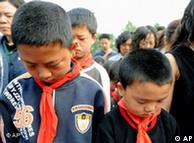
In this photo released by China's Xinhua News Agency, children attend a mourning ceremony for victims in the quake-hit Qingchuan county, southwest China's Sichuan Province, Monday morning, May 19, 2008. China on Monday began a three-day national mourning for the tens of thousands of people killed in a powerful earthquake which struck the country's southwest on May 12. (AP Photo/Xinhua, Tao Ming) ¡¡

四川大地震後,參加哀悼儀式的兒童


---

紅色高棉領導人的庭審開始

柬埔寨紅色高棉(Khmer Rouge)審判法庭上周完成了公開聽證的程式。檢察官指控其中三名被告,在紅色高棉時代為政府最高領導人期間,犯下種族屠殺、戰爭罪,以及反人道等罪行。

檢方用了一天半的時間,將這些前紅色高棉領導人的一樁樁罪行提交給法庭。檢察官凱利
(Andrew T. Cayley)説,這些柬埔寨共産黨的首領,認為他們發現了其他革命行動,所沒有掌握的共産革命成功的秘訣:「這些被告認為,過去共産革命之所以失敗,是因為階級敵人滲透並且腐化了革命。這些被告所抓住的一個簡單方法是全面徹底消除階級敵人。」

凱利繼續説明被告如何認定他們心目中的敵人,以及這種方式如何驅使他們展開了標誌那個時代的大屠殺:「事實真相是,被告眼中的柬埔寨共産黨的敵人,是一個不斷發展、人數持續增加的組織」

紅色高棉於1975年成功奪取政權,這時他們的敵人是與被推翻的朗諾政權有關的人員,也包括學生、教師、醫生、律師、以及城市居民。到紅色高棉政權在1979年被逐出之前,偏執成狂的觀念使他們把各方民眾都當作敵人,甚至把領導層內的人也當作敵人對待,數目眾多的自己人也遭到了整肅。

凱利説:「隨著紅色高棉政權的發展,柬埔寨共産黨裏偏執狂式的領導人深信,他們的失敗,一定是美國中央情報局、蘇聯的KGB情報機構,或者越南的間諜人員造成的。於是他們又將揪出敵人的目標,從階級敵人轉移到滲透到各級領導層內部的敵人。」

被告和他們的律師們卻説,檢方的指控並不真實,完全就是充滿想像的童話。就像《三劍客》作者大仲馬筆下一部小説一樣,純屬虛構。

現年85歲的被告農謝(
Nuon Chea精力過人,他花了90分鐘的時間,讀完了他的辯詞。這一點顯示了當初為什麼他會是運動的首席理論家。他的辯詞通篇都是誹謗紅色高棉宿敵越南的言辭。 他在法庭上説,這個柬埔寨東部的鄰國,長期以來都在陰謀對付柬埔寨,並企圖徹底消滅柬埔寨民族。他參加革命,是為了捍衛柬埔寨。

紅色高棉時期的國家元首喬森潘
(Khieu Samphan),也以愛國主義作為自己的辯護理由。他對檢察官們説,他在巴黎留學期間,在修讀經濟博士學位的過程中,就對共産主義産生了興趣::「你們今天把這當成笑話。可是我要提醒你們,在那個時代,共産主義是為全世界數以百萬計青年帶來希望的唯一運動。那時我所追求的,是為我國所能經歷的最佳經驗。」

喬森潘也談到1969年,美國對柬埔寨實施的非法大轟炸軍事行動。那場轟炸被廣泛認為導致了對紅色高棉支援度的提升。但是在事件時間點上,跟這些政治人物為法庭規劃的嚴格的時間範圍扯不上關係。

他説:「你能想像經過那場血腥轟炸後,我的國家面臨著什麼情況嗎? 不論你贊同與否,絕大多數柬埔寨人都開始支援我們反對朗諾集團的鬥爭。」

紅色高棉政權前外交部長英薩利(
Ieng Sary僅做了簡短申訴,抱怨法庭不予考慮他曾獲得王室特赦這一事實。柬埔寨皇室為了鼓勵他和數以千計的部眾投誠,曾在1996年給予他特赦。

這三名紅色高棉的領導人被控種族屠殺、戰爭罪和反人類罪等。其中包括的罪行有殺戮、滅絕、奴役、拘禁、虐待、迫害以及故意殺人等等。他們從19751979年間,制訂了導致大約兩百萬人死亡的政策。但他們否認一切罪名。

關注本案的柬埔寨人民反應不一。有些人同情這些年邁的被告,也有人對這些被告一再否認犯下眾人親眼目睹的罪行而感到憤怒。

儘管農謝和英薩利都沒有提到他們被控的本質問題,喬森潘倒是回應了檢方對他的指控,並且對若干罪行證據提出了反駁。農謝的辯詞焦點集中在當時的政治環境,以及柬埔寨和越南共産黨之間的惡劣關係。

在喬森潘方面,他的辯詞是:「即使我當時捲入其中,我並不是常務委員會的成員。我也不是有效的決策人。但當時國家陷於混亂,我們無法控制這一切。」

對這三名前紅色高棉領導人的審訊,已經分成一系列的分庭審理。本週所見的,是其中的第一次庭審。審訊的大部分案情,將是被控的反人類罪,內容涉及強迫人民遷徙。罪行分為1975發生的兩項事實,其一是當紅色高棉的頭子波爾布特的部隊佔領柬埔寨之後,強迫所有城鎮居民遷離居所。當年稍後,又強迫大量民眾長途跋涉,橫跨全國,進入勞改營。

起訴書指出,數以萬計的人民在遷移中死亡。這次遷移成為人民一系列恐怖經驗的開端。在凱利起訴書的開始,就指出事故規模之大,以致每四人中就有一名柬埔寨人死亡:「自從兩千四百年前,雅典城邦屠殺米洛斯島上所有成人並將女子及兒童收為奴隸後,再也沒有任何國家經歷過如此大量的死亡情況。我們將一個國家人口與其中死亡或謀殺的人數對比,這些被告在柬埔寨造成人類浩劫,在現代時期,其規模無與倫比。」(節錄自美國之音中文網11/27報導)

*更多轉型正義相關資訊,請上本會網站www.taiwantrc.org